

Taiwan has become one of the most important places in the world for technology. Its semiconductor factories produce the advanced chips used in smartphones, cars, computers, and artificial intelligence systems. Some of the world’s largest technology companies depend on what comes out of these factories, many of which operate around the clock.
Keeping them running requires an enormous amount of electricity. As demand for artificial intelligence grows, Taiwan is preparing for another wave of industrial expansion that will place even greater demands on its power supply.
There is also a geographical reality behind this economic success. Taiwan is an island that imports nearly all the energy it consumes, much of it in the form of fossil fuels transported by sea. That dependence makes reliable electricity especially important to the country’s economic security. Every new factory and data center adds to the challenge of ensuring enough power will be available in the years ahead.
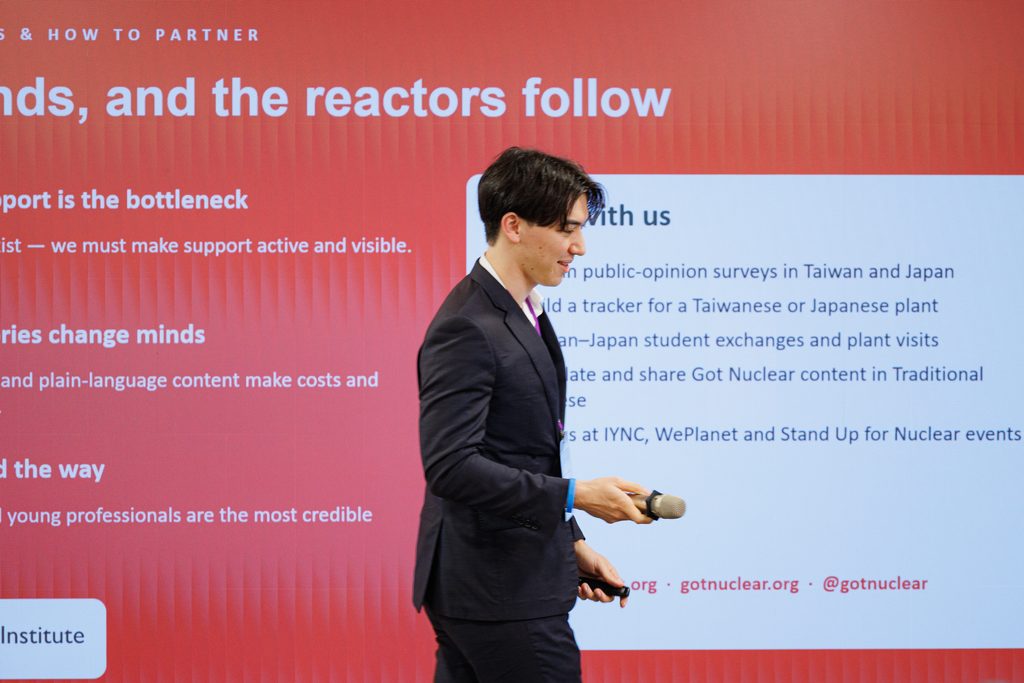
In October, I traveled to Taipei to speak at the 2026 SMR/MMR Forum. The event brought together researchers, reactor developers, manufacturers, and energy policy specialists from Taiwan and overseas to discuss small modular reactors and microreactors. These technologies are attracting international interest because they could make nuclear energy available in smaller, more flexible forms, including for industrial applications.
The forum gave me an opportunity to hear how Taiwan is approaching advanced nuclear energy and the decisions involved in introducing new technologies into its electricity system.
One discussion concerned an agreement between Google and Kairos Power, an American company developing advanced nuclear reactors. Google is helping support the development of new nuclear generation through a long-term agreement with Kairos Power. The first planned project involves supplying electricity to the Tennessee Valley Authority’s grid, which serves Google data centers in the United States. It’s an example of how technology companies are working with energy developers and utilities to secure the power they expect to need in the coming years.
A speaker raised the possibility of a Taiwanese company pursuing a similar arrangement. The basic idea sounds straightforward. A company needs electricity, a developer builds a power plant, and a long-term agreement helps make the investment possible. Yet in Taiwan, such an arrangement could have wider consequences because the country has spent years developing its offshore wind industry.
Wind farms are expensive to build, and developers often depend on customers willing to purchase their electricity over many years. Those contracts help secure the financing needed to get projects underway. If advanced nuclear developers eventually began offering similar agreements to Taiwan’s major industrial customers, they could find themselves competing with offshore wind developers for the same business.
The speaker described this as a dilemma. Allowing private companies to secure electricity from new nuclear projects could give Taiwan’s technology industry more options, but it might also affect the market for offshore wind, an industry that has already attracted considerable investment.
I understand the concern, especially given the resources Taiwan has committed to renewable energy. At the same time, I would welcome more opportunities for Taiwanese businesses to secure reliable, low-carbon electricity. Semiconductor manufacturers and data centers need dependable power, and having more ways to obtain it could give them greater confidence when planning new facilities and investments.
Nuclear power can produce electricity continuously, regardless of weather conditions, making it valuable for industries that operate day and night. Offshore wind can contribute significant amounts of low-carbon electricity, with output that varies according to wind conditions. Both involve large investments, and both require careful planning to deliver electricity at a cost that businesses and households can afford.
Taiwan has already gained experience developing offshore wind, and some of those lessons may prove useful as it considers advanced nuclear. The commercial arrangements that encourage investment in new power generation will matter just as much as the technology itself.
This came through in another part of the forum, where the discussion turned to a basic question: someone eventually has to pay to build these reactors.
Taiwan’s nuclear industry has traditionally operated through the state-owned electricity company, Taipower. Advanced reactors could introduce different arrangements, including private developers supplying electricity to industrial customers through long-term agreements. That would require clear rules covering licensing, project financing, and the responsibilities of companies entering the nuclear power business.
One presenter drew on Taiwan’s experience with offshore wind to explain why investors need to understand how projects will earn money before committing large amounts of capital. Developers also need clarity about the approval process and the obligations they will carry over the life of a project.
Nuclear energy brings additional requirements involving safety regulation, radioactive waste management, and eventual decommissioning. These responsibilities have to be reflected in project costs and agreements from the beginning.
There is also the challenge of deciding which technologies to pursue. Many different small modular reactors and microreactors are being developed internationally. Some are intended to supply electricity to communities or industrial facilities, while smaller designs are being considered for specialized applications. Their development schedules and likely costs vary considerably.
Taiwan has limited resources for research and development. Choosing where to concentrate those resources will require looking closely at which designs are technically mature, what they could realistically provide, and whether they suit the country’s needs.
Taiwan’s manufacturing capabilities offer another way for the country to participate in advanced nuclear development. Companies here already have experience in precision engineering and producing components to demanding technical standards, skills that could be useful to reactor developers overseas.
At the forum, we heard about visits by a Taiwanese university research team to Idaho National Laboratory and Westinghouse in the United States. The team had also examined a demonstration model of Westinghouse’s eVinci microreactor. Visits to South Korea included organizations involved in nuclear research and manufacturing. These exchanges are giving Taiwanese researchers direct exposure to technologies being developed overseas and helping them explore possible connections with reactor companies and their suppliers.
Building a nuclear reactor requires specialized components and materials that meet strict quality and safety standards. Taiwanese manufacturers already work to demanding specifications in other industries, although entering the nuclear supply chain would involve additional expertise and certification. For companies willing to make that investment, advanced nuclear could open another international market.
Taiwan could become involved in nuclear projects overseas even before deciding which reactor designs, if any, to introduce domestically. A Taiwanese manufacturer supplying components for a reactor in another country would be participating in the growth of advanced nuclear technology, regardless of when Taiwan might build its own.
Many of the newest reactor designs still have to demonstrate that they can operate successfully on a commercial scale. Some are approaching their first projects, while others remain at earlier stages of development. Their construction costs, operating performance, and ability to produce competitively priced electricity will become clearer as more reactors are built and operated.
Taiwan’s immediate energy needs cannot depend on technologies that may take years to become commercially available. Its existing electricity system and renewable energy investments require attention now. Following the first advanced reactor projects overseas will help Taiwan understand which designs are progressing and what challenges developers encounter along the way.
During the forum, I was encouraged by how much attention was being given to the details of making these projects possible. Researchers were examining which reactor designs might suit Taiwan, manufacturers were looking for opportunities to work with overseas developers, and energy policy specialists were discussing how new projects could be financed. These are questions that need answers before advanced nuclear can become part of Taiwan’s electricity supply.
The discussion about Google and Kairos Power was a good example of why those details matter. Technology companies are already thinking about where their future electricity will come from, and some are prepared to support the development of new nuclear projects to secure it.
Taiwan’s technology companies face similar questions as they plan their next factories and data centers. I would like to see them have access to more options, including advanced nuclear when the technology is ready and the necessary safeguards are in place. Giving businesses that flexibility could help Taiwan meet growing electricity demand while continuing to develop other low-carbon energy sources.
For a country whose factories help power so much of the modern world, securing the energy to keep those factories running is an important part of protecting what Taiwan has built.