


On October 7, 2026, the Innovation 4 Nuclear final was held in Cellier Benoît XII, the old wine cellar beneath the Palais des Papes in Avignon. Teams had come through nuclear innovation competitions in Europe, Africa and Asia, and each had only a few minutes to make its case before an international judging panel.
When Japan was called, Kota Kawai, Yu Fujiwara, Haru Tagawa and I, Taiga Cogger, went forward to present a project we had named NUVITA. I did most of the speaking, and we had rehearsed it tightly. The first slide showed a photograph of stacked metal with one question across the screen: “What do you think this is?”
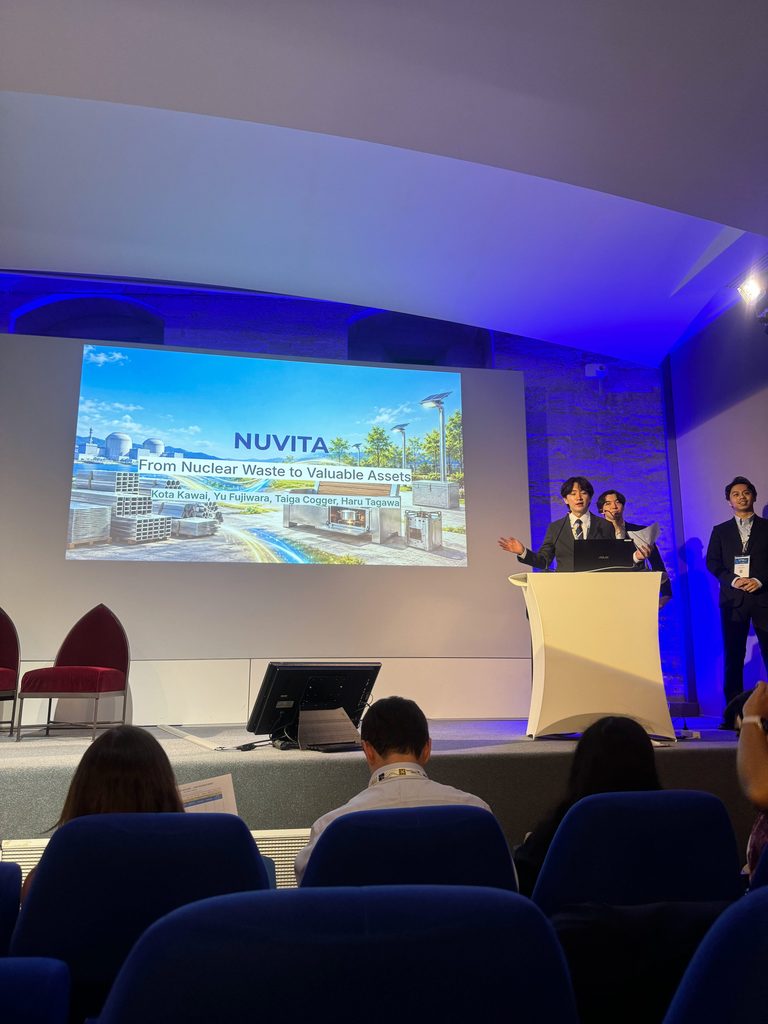
The answer was metal from nuclear decommissioning. It looked much like material from any other industrial site, and that was useful for explaining an idea that can sound far more complicated once nuclear terminology enters the conversation.
Japan already has experience putting cleared material back to work. At Hamaoka Nuclear Power Station, around 115 tonnes from Units 1 and 2 has been reused to make drainage covers. Before material can reach that stage, it has to be measured and assessed under Japan’s clearance system and receive government confirmation that it meets the requirements for release.
During the questions after our presentation, one of the judges went straight to the issue that sits underneath the whole project: if the metal came from a nuclear facility, how do you know it is safe?
I explained that our proposal begins after clearance. NUVITA does not decide whether the material is safe to release. That happens through the regulatory process before the material reaches us. We were asking a different question: once cleared metal is available for reuse, what could we make from it that people would actually want?
Our starting point was bousai, the Japanese word for disaster preparedness. Earthquakes, typhoons and other natural hazards make emergency planning a familiar part of life in Japan. Families keep supplies at home, and schools, workplaces, hotels and public facilities prepare for the possibility that electricity, water or transport may suddenly stop.
We developed concepts for emergency-preparedness products using cleared metal, including an emergency-kit case, a whistle and the housing for an LED lantern.
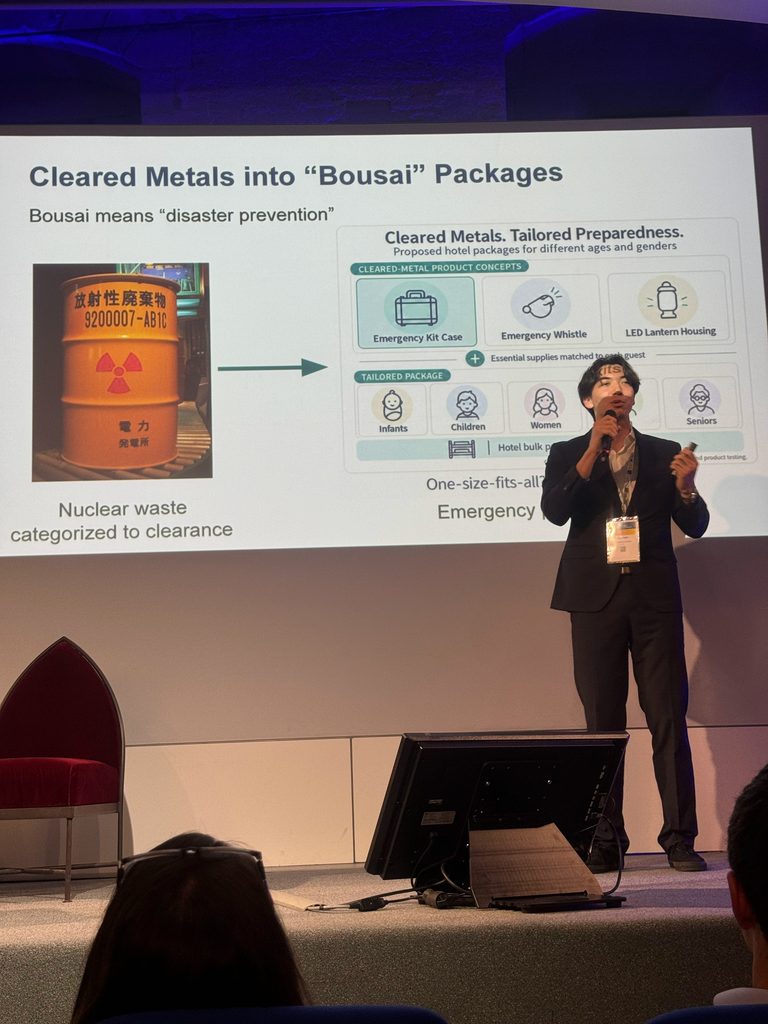
Those products gave the idea something physical. A whistle can help someone attract attention after an earthquake. A lantern is useful when the power goes out. An emergency kit exists because somebody may genuinely need it one day. The nuclear origin of the material gives the product a history, and its usefulness gives someone a reason to own it.
One line in our presentation captured the business idea: “Product value drives demand; nuclear understanding is a further benefit.”
That principle was important to us. NUVITA cannot depend on people buying something simply because they support nuclear energy. The product has to work, look good and make sense at the right price. Its history can then add another layer.
We called the proposed brand Nuclear Heritage. The idea was to keep the origin of the material traceable through a digital passport, allowing someone to scan a QR code and learn where the metal had come from and what role it once played. One example in our presentation used material associated with the Fugen Nuclear Power Station to show how the history of a facility could remain connected to a new product.
Presenting all of this in Avignon added another challenge. Bousai feels immediately familiar in Japan. Clearance has a precise meaning to people working in the nuclear sector. In that old cellar in France, we were speaking to people from different countries and different parts of the industry, and we had only a few minutes to connect those two ideas in a way that made sense outside Japan.
The question from the judge about safety brought that challenge into focus. Someone seeing a product made from cleared nuclear material may know nothing about decommissioning or clearance. Their first reaction may be exactly the same: is this safe? Any real product will have to answer that question clearly enough for people who have never worked in nuclear energy.
When the results were announced, Japan finished in third place.
We were very happy. We had spent time working through the idea, cutting down the presentation and rehearsing how to explain it within a few minutes. Then we had taken it to France, presented it alongside other international teams and answered questions from people who did not automatically share the same assumptions we had started with in Japan. Hearing that we had placed third gave all of that work a very tangible result.
The competition also made the next step easier to see. Slides can show an emergency kit, a whistle or a lantern. The real test comes when there is an actual object that someone can pick up, use and decide whether they would pay for.
If NUVITA reaches that point, the question we heard in Cellier Benoît XII will still be waiting for us. People will want to know where the material came from, how it was checked and why they can trust it. Those are reasonable questions. Building something useful from cleared nuclear material will depend on answering them just as carefully as we design the product itself.