


When I stepped off the plane in Winnipeg, the air was cold and sharp, the kind that wakes every sense. I had flown from Japan to attend the Youth Nuclear Peace Summit at the Canadian Museum for Human Rights. Representing the Anthropocene Institute, I did not know exactly what to expect. After two long flights and a night of layover coffee, stepping into the museum felt almost unreal, as if the miles between Tokyo and Winnipeg were part of the lesson itself: that peace takes effort, patience, and the courage to cross distances, both literal and human.
The museum’s glass and stone rose against a gray prairie sky, a reminder that peace is not just an ideal, it is something people build. Inside were students, scientists, and advocates from every corner of the world. Some carried disarmament banners; others brought notebooks filled with reactor sketches. It was a rare mix, idealists and engineers in one place, talking about how to prevent the worst and imagine the best.
The opening speakers were direct. The nuclear threat, they said, is higher now than at any time since the Cold War. Between political tension, cyberattacks, and artificial intelligence, the risk of a mistake is frighteningly real. Listening, I felt the weight of that truth, and also the irony. I have always believed that nuclear energy, used wisely, could be one of humanity’s greatest tools for peace. Yet here we were, still shadowed by the same fear that haunted my grandparents’ generation.
Dr. Ira Helfand, a Nobel Peace Prize recipient, described what a modern nuclear exchange would mean: millions dead in moments, billions starving in the years that follow, a global winter blocking out the sun. Then he said quietly, “These are machines we built. And we can take them apart.”
That line stayed with me. The same intelligence that created this threat could also end it. That, I realized, is the real test of who we are.
As a Japanese student, the hibakusha stories struck the deepest chord. My grandparents told me how the sky itself felt changed after Hiroshima and Nagasaki. Hearing survivors’ voices at the summit, I understood something beyond history: their message is not just about grief, it is about responsibility. Remembering the past is not about blame; it is about ensuring that science serves life. Their courage gives my generation a starting point, not to live in fear of the atom, but to master it with humility.
Later, young participants presented on the humanitarian and environmental impacts of nuclear weapons: poisoned mines, displaced families, and generations marked by radiation’s invisible shadow. But what inspired me most was their focus on solutions. Many spoke about thorium, a safer, more abundant element that could power molten salt reactors without the same risks of meltdown or weaponization. I was impressed not only by their technical insight but by their optimism. They were not rejecting nuclear science; they were reclaiming it. For me, that moment defined what youth leadership in nuclear means, not rebellion, but renewal.
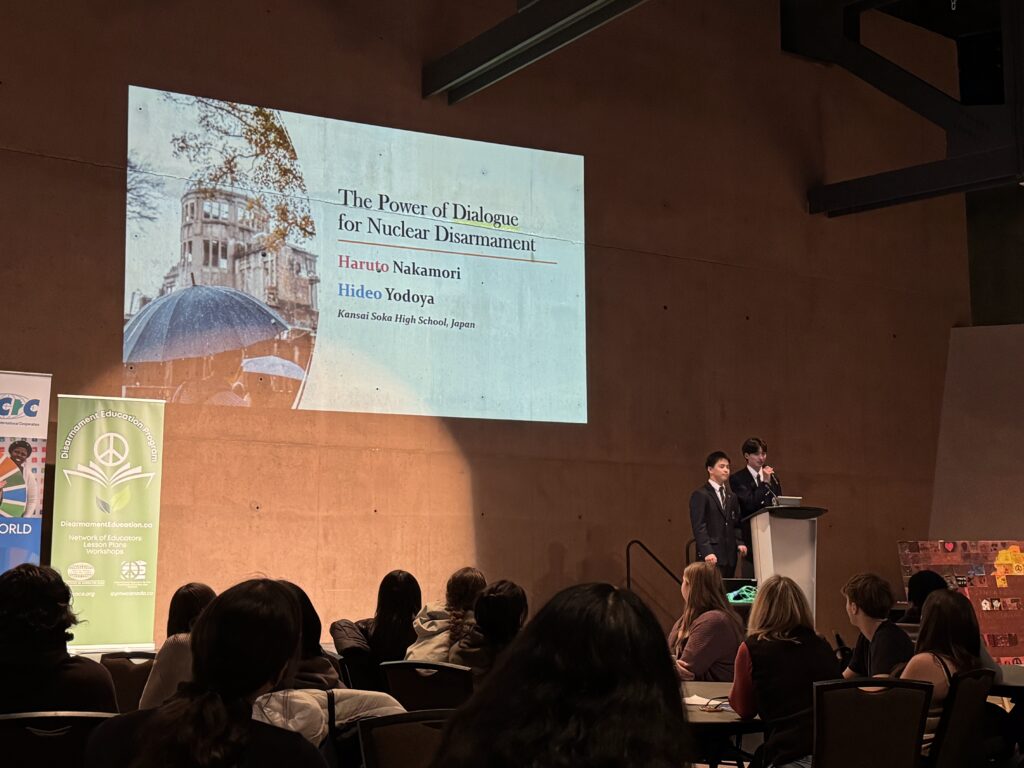
Still, innovation alone is not enough. Safe nuclear progress depends on transparency, international cooperation, and the willingness to share knowledge openly, not hoard it behind national borders. Science must unite, not divide.
During a workshop on ethics, someone said that technology without morality is like power without direction. I thought about that while walking through the museum’s exhibits, photographs of ruined cities beside testimonies of survivors who rebuilt from ashes. Japan’s experience, painful as it is, gives us a unique responsibility in this global story. We have seen both sides of the atom: destruction and renewal. Maybe that is why I feel such urgency to talk about nuclear energy not as a danger to humanity, but as a duty of it.
Between sessions, I met students from Iran, Canada, and the Marshall Islands who spoke about how their families still live with the consequences of testing or sanctions. Over lunch, a Marshallese student showed me a photo of her village, half of it already underwater. “We are not just losing land,” she said, “we are losing memory.” Her calm voice carried more power than any speech that day. It reminded me that peace work does not begin with shouting; it begins with listening.
As the summit drew to a close, I looked around the room and felt something unexpected, a quiet certainty that this is not about waiting for world leaders. It is about us. The next generation. Scientists, students, and thinkers who will decide how this story continues.
I left Winnipeg with a clearer sense of purpose. Nuclear technology holds enormous power, but power demands responsibility. What encouraged me most at the summit was seeing how many young people are thinking deeply about how to use that power properly. The thorium and molten salt reactor discussions showed that innovation and peace do not have to be opposites. We just need more people to learn about it, and more open dialogue between generations, because understanding grows only when shared.
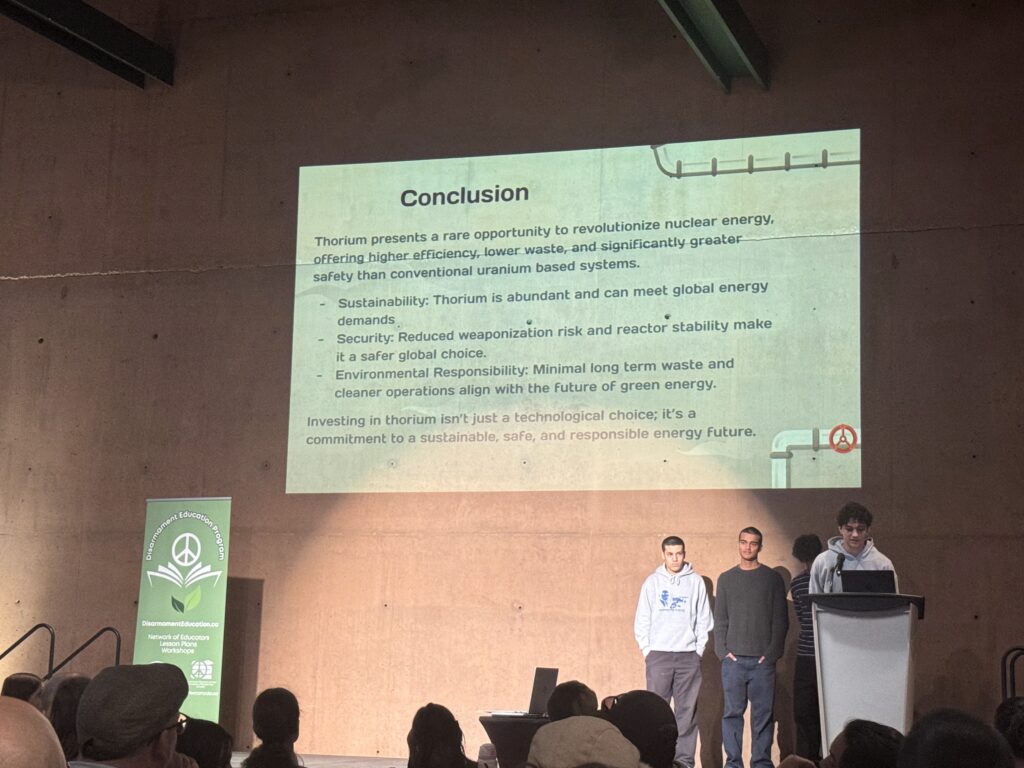
Maybe that is the real legacy of this summit: learning that peace and progress can grow from the same element, if we choose wisely.
Atoms can destroy, or they can sustain. The choice, as always, is ours.